Sometime in August my friend Monica forwarded me an e-mail with the note: “Why haven’t we heard about this?”
It was an invitation to the Boston Food Swap. Essentially, it’s a silent bidding auction where you bring something you made or grew and use it to bid on items from other people. It’s low-key, fun, and a nice way to meet other people who are interested in making and sharing their own food.
I vote to change the spelling of July. Let’s spell it “Jewel-eye.”
“Jeweled” describes the color of the sky that was Saturday morning – deep, deep blue with tiny clouds that posed no threat to the early light. These kinds of days last just a few weeks in New England and I always walk around pinching myself a bit when I realize that, for once, the weather has been tamed into something lovely.
After a swim across Walden Pond that morning, I stopped by Allendale Farm searching for a breakfast scone. I feel incredibly fortunate to live in the heart of one of Boston’s neighborhoods and still have access to a farm stand just a few minutes from my house with its own locally grown produce.
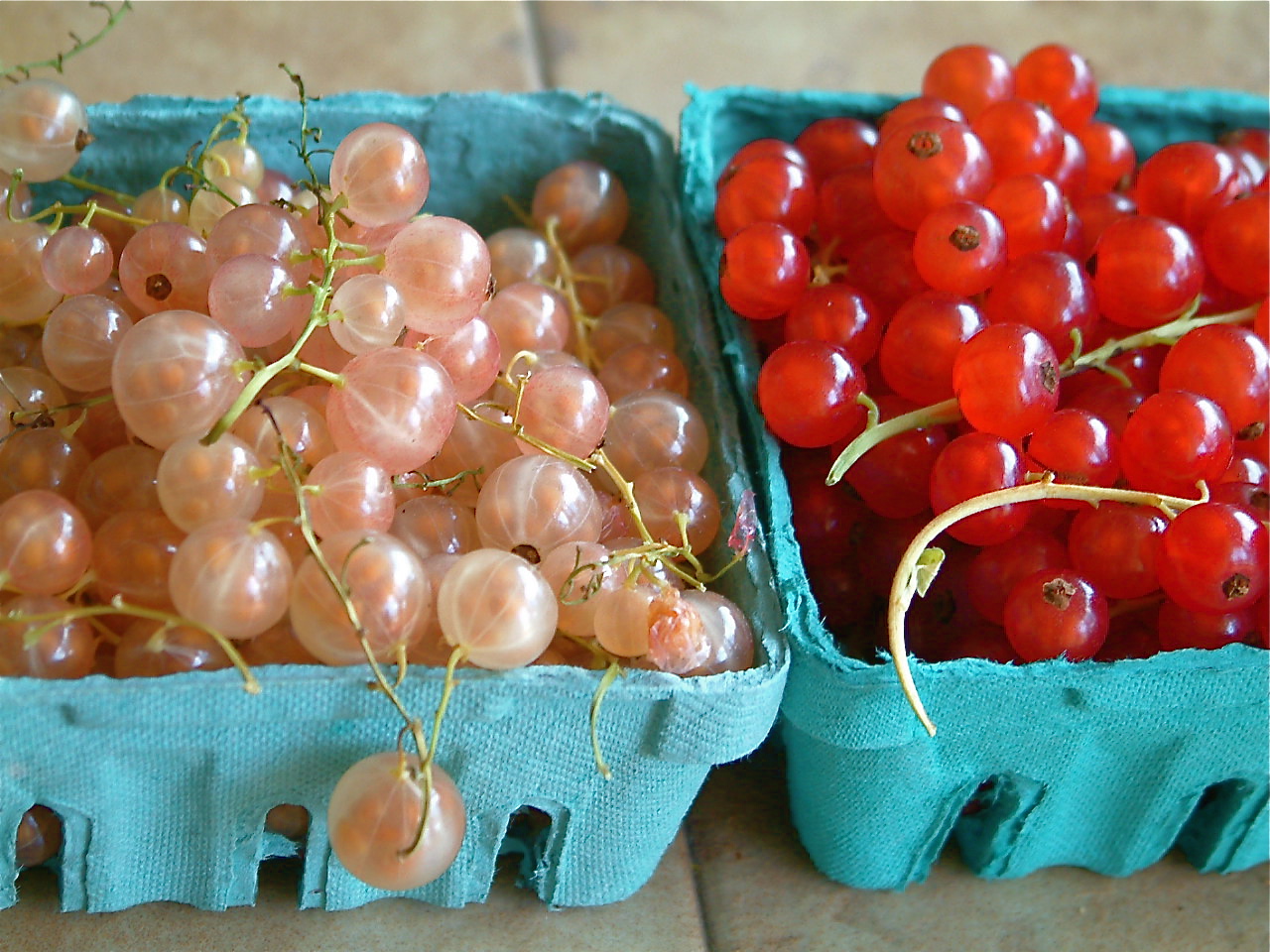
That’s when these beauties caught my eye: pink and red currants.
The pinks glowed like pearls and the reds were so bright they looked dangerous. Most people know currants as tiny dried fruit that resemble raisins used in baked goods or salads. Tangy and tart, fresh currants are usually part of a garnish, topping a sorbet-filled melon, for instance, or in a sauce to complement a roasted meat. But I wanted my currants to star in the center ring.
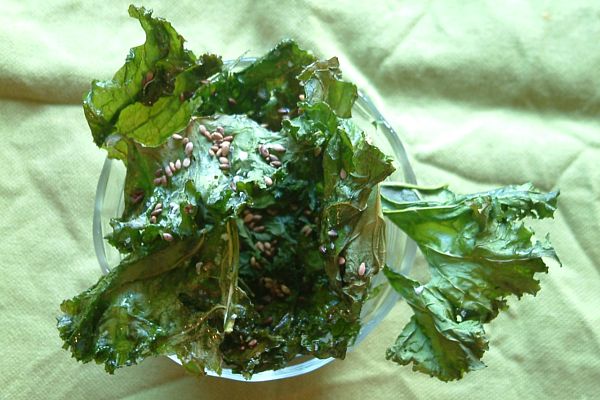
The next time you get a crunchy, salty craving you might try making kale chips.
They are so easy to make and tasty it’s almost ridiculous. You simply tear a bunch of kale into bite sized pieces, coat in oil and seasoning, and bake for about 15 minutes. If you’ve signed up for a CSA (community supported agriculture) share this summer you’ll thank me in a few weeks when kale starts to arrive by the bagful.
The great thing about kale chips is you can play around with flavorings. Try adding a dash of cumin or garlic salt. Or you can use a seasoned oil. I have some Australian macadamia nut oil in my cupboard and this ended up being a delicious choice. I also toasted some sesame seeds and sprinkled them on top. I recommend a crunchy salt like sea salt or kosher salt for added texture. (more…)
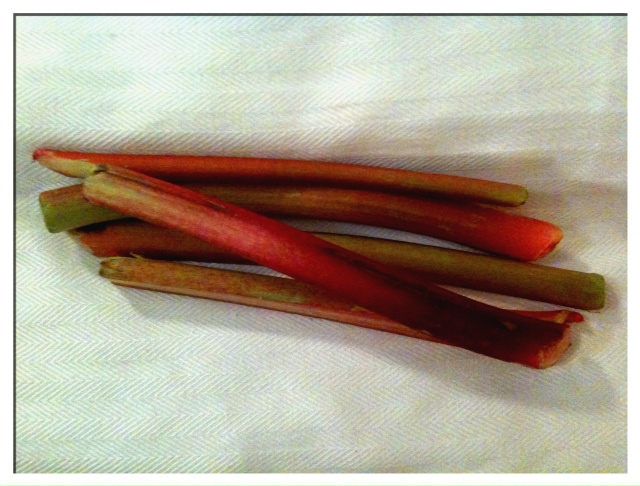
Spring has finally, finally arrived for good. Besides an abundance of blossoms, sunnier days, and friendlier people, long stalks of crimson rhubarb are back in the grocery produce section.
Say the words “rhubarb” and most people think of warm rhubarb and strawberry pie topped with vanilla ice cream. Yum! But Louisa Shafia in her lovely cookbook “Lucid Food: Cooking for an eco-conscious life” offers another tasty use for one of spring’s first vegetables: rhubarb spritzers.
I had an epiphany at the Boston Local Food Festival on Saturday. I was standing in line at a farm stand, arms overflowing with vegetables, bright sunshine bathing rows of colorful vegetables in white light, and listening to the jangle of banjos from a Cajun band playing on a nearby stage when I realized: Why can’t buying produce always feel like this?
Going to the grocery store, bracing against its uncomfortable chill, wandering aimlessly in aisle after aisle of fabulously packaged goods competing for my attention as Top 40 music wails of love gone wrong – simply fills me with dread.
Would I consider buying kale in that kind of environment? No. Would I consider it in a sunbathed pile while a smiling farmer stands nearby? YES. (more…)
It is easy to take the tomato for granted in late summer. A stroll around Copley’s Farmer’s Market, or any farmer’s market, shows an abundance of these beautiful round shapes, their skins taut and from juices who’ve had the luxury ripening in the fresh air of an open field instead of a hothouse. But these jewels are fleeting. Eat them while you can.
I was at the farmer’s market last Friday, a few blocks from the Monitor. I had met my mom and my brother there for lunch. Mom had taken a bus up from the Cape with a group that was listening to a performance of Trinity Chapel‘s organ (not to miss, if you are ever in Boston). My brother’s office overlooks Copley Square from his shiny office tower in the John Hancock building. It was easy for him to swoop down and join us for a sandwich among the smells of ripe vegetables and the sounds of a guitar and saxophone jazz duet.
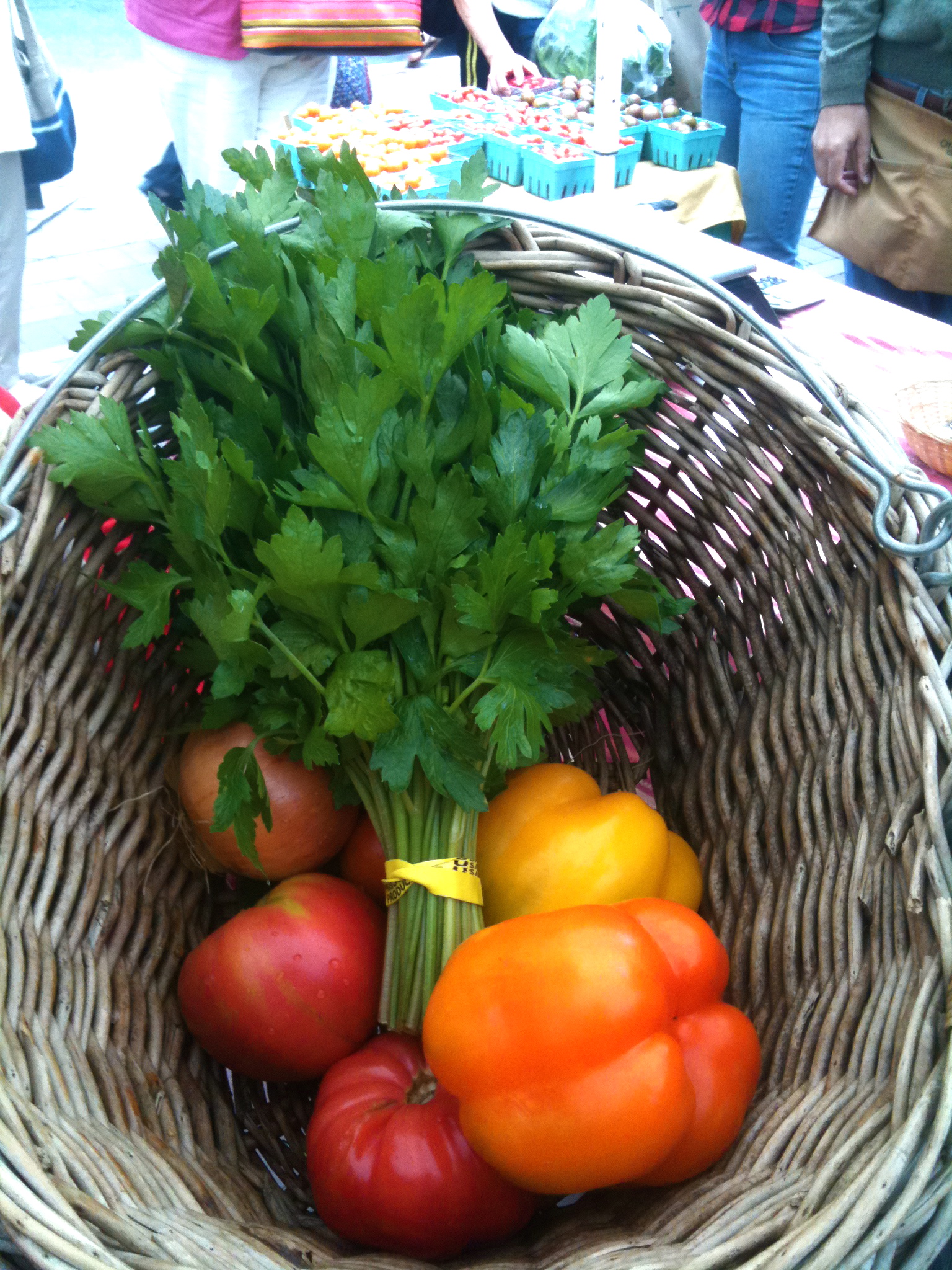
Mom spotted a gazpacho recipe pinned to a basket of tomatoes in one of the stalls. I didn’t waste any time in loading up my own bag with the ingredients (parsley, peppers, heirloom tomatoes, yellow onion). I had been wanting to try making a batch of gazpacho since I spotted the Rowdy Chowgirl’s recipe, a new pal from the International Food Blogger’s Conference.
For a few years after college, my brother and I both happened to live in Atlanta, Ga., a city where every street is named Peachtree. While there I discovered fried okra, fried green tomatoes, grits, black-eyed peas (which are white beans), sweet tea, and hot donuts from Krispy Kreme. It’s not exactly light eating down South. Comfort food has staked its claim and stubbornly resisted any marauding fad diets. (more…)
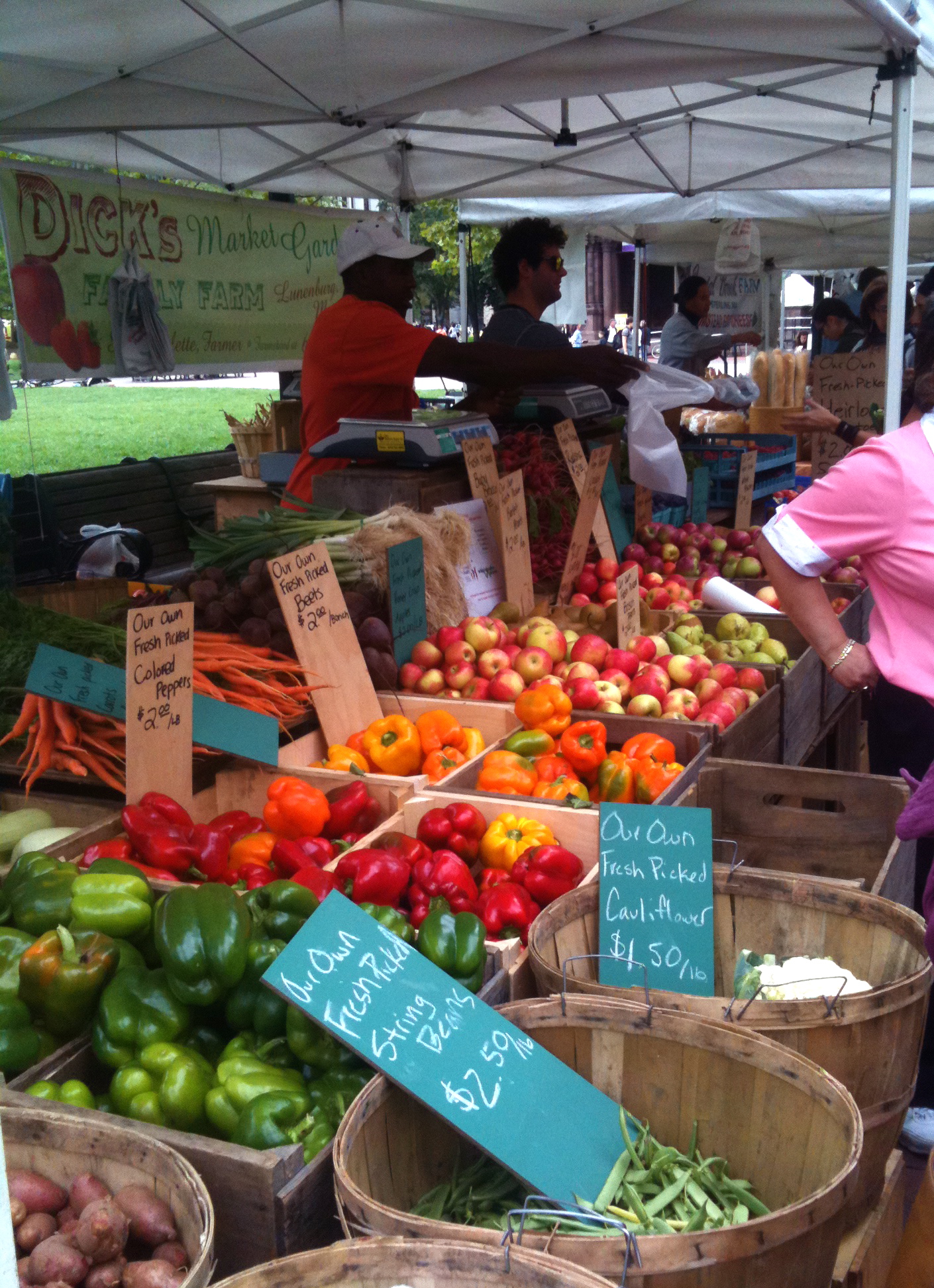
I was strolling through the Farmer’s Market at Copley Square on Friday and I heard a woman say, “This is heavenly.” She’s right. Something about baskets of peaches, tangles of beans, and bright sunflowers softens the heart of a city and brings things down to human scale in a forest of skyscrapers and historic buildings. Rows of homemade cookies, bags of bread, and jars of honey have the power to soothe even as sirens wail and traffic rushes by just a few feet away.
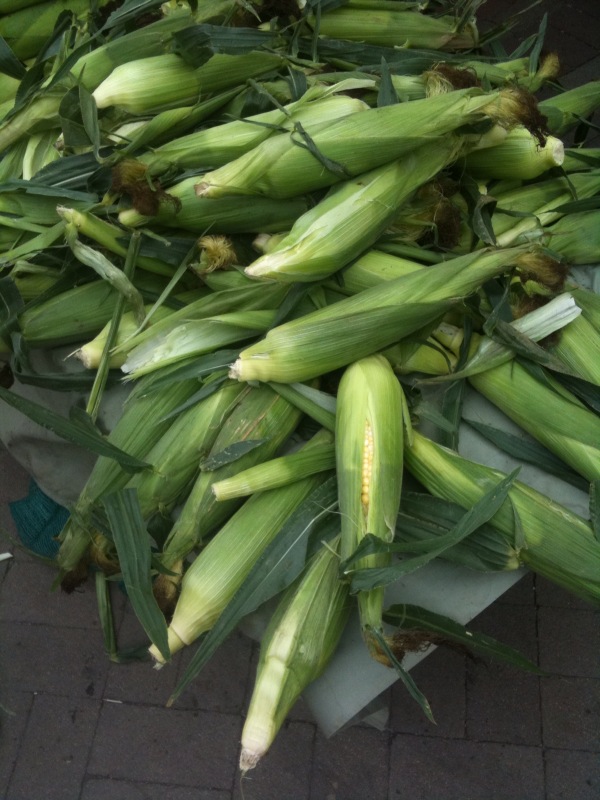
And then there’s the corn. Lots and lots of corn.
You barely need to do anything to food that is this fresh, just take take it home and strip it down.
I was heading to a potluck later that evening and I knew exactly what I wanted to bring: A corn and black bean salad, using raw, sweet corn. I came across this recipe at a Fourth of July party last year.
“It’s so easy,” the hostess kept telling me. A guest at the party insisted that the secret was a packet of Good Seasons Italian dressing. If you don’t have that handy, it’s pretty easy to season this any way you like, using a combination of dried herbs (basil, oregano), salt (onion, garlic, celery), and a little sugar to draw the sweetness of the corn and fruit. This recipe uses mangoes but I bet you could use peaches, which are just coming into season. (more…)
Besides caprese salad, capris pants, flip flops, and sunburned shoulders, another summer classic not to be left out is basil pesto pasta. Or basil pesto anything. There the basil is – swaying in the garden, or sprouting in the window box, or bursting as a simple bouquet on the green grocer’s shelf. Use me now, it seems to say, because you’ll miss me when I’m gone.
My mom has made pesto every summer that I can remember. The master of winging it in the kitchen, it is hard to anticipate what Mom’s pesto batch will taste like. Sometimes it is sharp, or sweet, or bitter. But it always says fresh, as in right now.
I prefer predictability when it comes to pesto, even though the best cooks and chefs will say an adventuresome spirit is exactly what you need in kitchen. Search the Web and you’ll find no two pesto recipes alike. But I have one that I turn to again, and again, and again, like a loyal, boring friend. It includes parsley, which tempers the basil in my opinion, and not too much garlic. I won’t disappoint you, it whispers between the ingredients. OK, I’m joking. It doesn’t really say that. (more…)
The two repeating drumbeats being sounded by sustainable food advocates are:
1. Industrial farming has grown too quickly to produce safe and humane food.
2. Inner-cities with their lack of access to fresh, locally grown food have become food deserts.
If this is a topic that you have been following, and have seen “Food, Inc.,” and “King Corn,” two documentaries that explore the problems of large-scale farming in the United States, you might also be interested in seeing “Fresh.” And if you feel like converting your friends to the cause, you can pay a licensing fee and host a screening.
Having seen “Food, Inc.” and “King Corn” and reviewed books by investigative journalist Michael Pollan already, I can’t say that I learned anything new (and still ate a hot dog at a barbeque the next day. I’m trying).
But, I did enjoy more in-depth interviews with Virginia farmer Joel Salatin and Milwaukee urban farmer Will Allen. The Christian Science Monitor published great profiles of these guys here and here. Interviews with hog farmer Russ Kremer and supermarket owner David Ball will really connect you to how the American food chain works. Here is a partial list of the characters in the documentary.
Two of my favorite quotes from the film:
“I’m just trying to help chickens express their chickeness.” – Joel Salatin
“Food is at the foundation, but it is really about life.” – Will Allen













 Kitchen Report