Feeds:
Posts
Comments

“Another advantage to cooking for yourself is that you have only yourself to please…. You can choose to make just what you feel  like – perhaps only a light, simple supper dish or a salad if you’ve consumed a rich meal at lunch that day. There’s no need to be a perfectionist, trying to win applause from your guests. If a sauce curdles, you’ll eat it anyway. And you’ll learn from your mistakes.”

–Judith Jones, “The Pleasures of Cooking for One

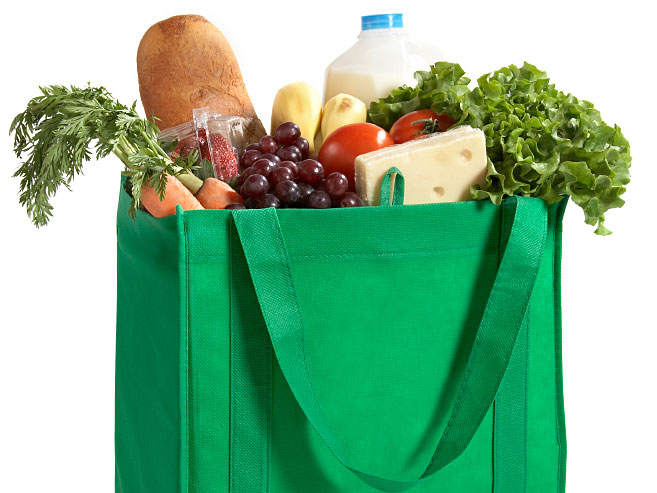
NPR will have a report on “All Things Considered” on April 26 about a Baltimore library partnering with a local grocery to help its resident neighbors have access to fresh food. Patrons can place and pay for orders online and then stop by the library the next day to pick up their orders. This could literally be a lifesaver for those families without easy access to supermarkets who settle for the paltry offerings at the local convenience store for sustenance. But beyond that, cooking leads to more people around the dinner table which strengthens family and community ties – a form of “communion” that we all need.

Three cheers for this innovative approach to the problem of “food deserts”! With libraries on the chopping block in my neighborhood and across the country, a new purpose to improve the lives of its patrons seems like a win-win-win for all involved.

There are plenty of references to Rachel Carson’s “Silent Spring” on Earth Day every year, but it’s Carson’s poetic book, “The Sense of Wonder,” that sits on my list of all-time favorite reads. Originally written as an essay for Women’s Home Companion, Carson urges parents to take their children to the wild places to teach them about the wonder of  life around us. Its childlike appreciation for all things natural helps to temper the otherwise worrisome discussions about our Blue Planet.

So I thought you’d might enjoy this short movie clip that uses Carson’s words to describe lessons learned from the Monarch butterfly (sorry about the breathy voiceover and violins, but Carson’s message centered on how the presence of happiness and beauty can nudge aside the sadness associated with the end of earthy lifecycles is inspiring).

Happy Earth Day. May you bloom with gratitude, fresh produce season is just around the corner….

Alice Waters believes in puttering in the kitchen. Chop and grind your own food. Cook slowly over moderate heat. Breathe. Taste. Compost. What’s the big rush, right?

Just in time for Earth Day, the ideas behind the Slow Food Nation 2008 event that brought together reform-minded foodies in San Francisco can now be savored at your leisure with Waters’ new cookbook “In the Green Kitchen” (April 2010, $28). Photographer Christopher Hirsheimer has captured gorgeous profiles of the chefs who offered cooking demos in the event’s Green Kitchen during the weekend. Simple recipes accompany each photo, their bylines reading like a “who’s who” of the foodie world: Tomatillo Salsa from Rick Bayless; Buttermilk Biscuits from Scott Peacock; Simple Tomato Sauce from Charlie Trotter; Linguine with Clams from Lidia Bastianich; Buttered Couscous from Dan Barber; Potato Gratin from Deborah Madison, and the list goes on. (Kinda makes you wish you had flown out there, huh?)

“All the good cooks I know are sensualists who take great pleasure in the beauty, smell, taste, and feel of the ingredients,” writes Waters in the introduction. “The value of learning a foundation of basic techniques is that once these skills become instinctive, you can cook comfortably and confidently without recipes, inspired by the ingredients you have.”

A cookbook that says forget about cookbooks? That’s about right. But sometimes we all need a reminder just to jump in and swim, er, cook and “In the Green Kitchen” with its pantry and essential kitchen-tool list is a good place to start.

Or if you are a procrastinator, take some time and copy this down and fasten it to your ‘fridge door:

A Green Kitchen Manifesto

Delicious, affordable, wholesome food is the goal of the Green Kitchen.

An organic pantry is an essential resource.

Buy food that is organic, local, and seasonal.

Cooking and shopping for food brings rhythm and meaning to our lives.

Simple cooking techniques can be learned by heart.

Daily cooking improves the economy of the kitchen.

Cooking equipment that is durable and minimal simplifies the cooking.

A garden brings life and beauty to the table.

Composting nourishes the land that feeds us.

Setting the table and eating together teaches essential values to our children.

Now get cooking! Slowly.
lasagna

This is a delicious lasagna that is rich with both sweet and nutty flavors. Sage is the perfect complement to butternut squash and the hazelnuts. This vegetarian dish is excellent without tasting like it’s trying to be a “meatless” version of a classic dish.

Continue Reading »

I have been glued to the Olympics coverage for the past two weeks and now that the Vancouver Winter Games are closed and the medals have been counted I’m feeling adrift.

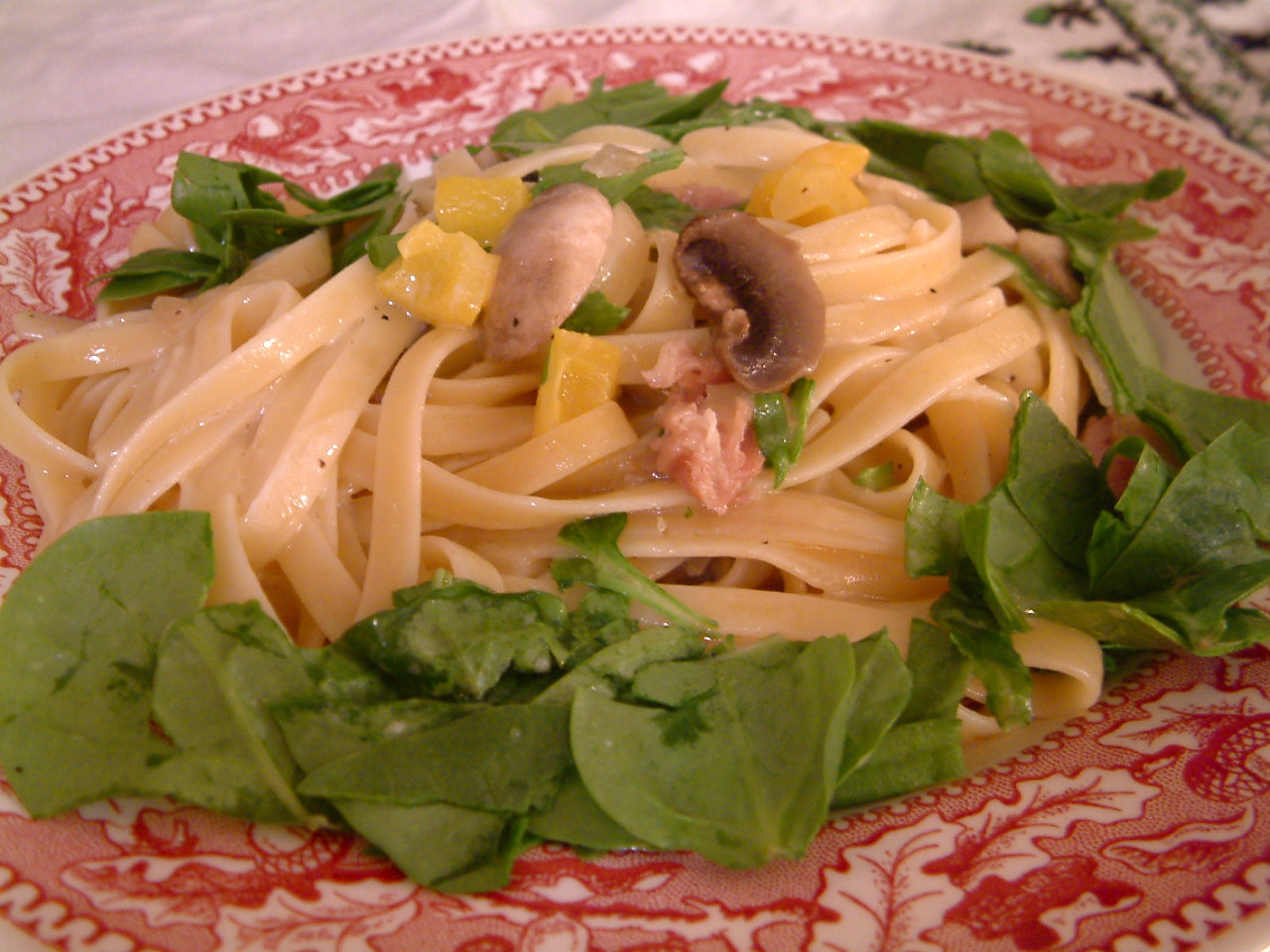
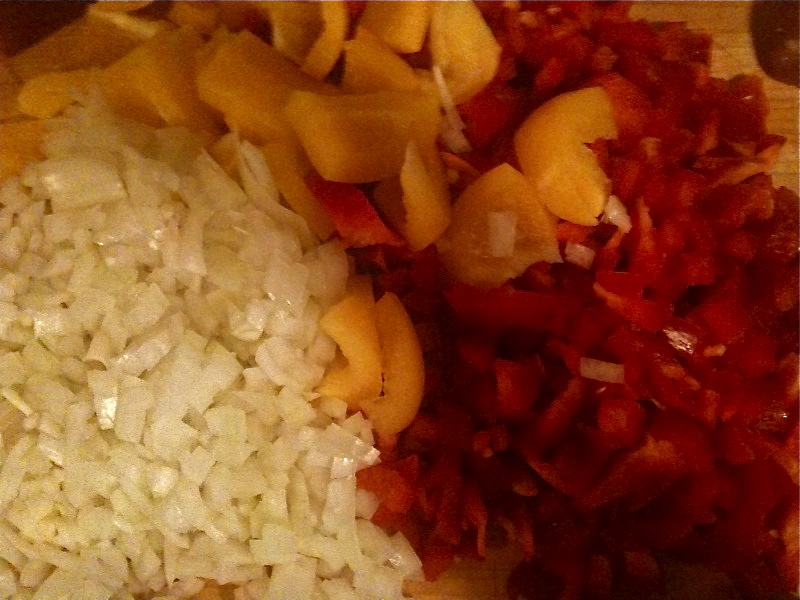
To extend the Olympic spirit just a bit longer I embellished fettuccine alfredo to evoke the slopes of Whistler complete with metaphorical splashes. Think cream of the crop. (I know, bear with me. The winters are long in Boston.) I sautéed onion and mushroom with yellow (gold!) pepper and ringed the plate with (a laurel wreath!) baby spinach. Every athlete knows how important it is to eat your spinach. So slide your fork down this white-coated mound of pasta, twirl it in the air, and deliver it to your winner’s podium. Taste the gold. Give it your all. Do it for your country. You earned it. Smile.

And for desert? Hannah’s Gold, for sure. Continue Reading »

My friend Nate has what I call a kitchen ministry. He gathers people around his table and showers them with affection and food on almost any night of the week. More than once I have gotten a “dp?” text message (meaning “dinner party”) that has pulled me out of the grooves my routine and into his kitchen just a few blocks away. It’s warm in there. The walls are painted reddish orange. And we always say grace before we eat. People depart transformed.

If there are more people than soup spoons, 15 was the count one night, Nate hands out measuring spoons as substitutes. I gave him a shoebox full of extra silverware for Christmas but I am pretty sure this box sits under his bed. He admits he likes the spontaneous creativity that comes with solving the problem of too many friends and too few spoons.

This stew reminds me of a dp at Nate’s house. A lot is crammed in and it exudes warmth. It’s from Deborah Madison’s “Vegetarian Cooking for Everyone.” I’ve left out a few fancy things below such as a bread crumb picada thickener and a romesco sauce to add zest. You don’t really need them, and if you think you do, you should just go out and buy the cookbook because it is full of great recipes. Continue Reading »

Forget trying to wrap your head around a complicated bipartisan healthcare plan. Treasury Secretary Tim Geithner and Agriculture Secretary Tom Vilsack, along with Michelle Obama are doing something that actually makes good common sense. They are launching a $400 million Healthy Food Financing Initiative (HFFI) that will bring decent grocery stores into the inner cities.

“Food deserts,” or a lack of grocery stores selling affordable, good food, is a huge problem. Convenience stores and fast food restaurants on every corner (read: easy access to fries, shakes, potato chips, soda, candy bars, other crap) cannot sustain healthy, happy dinner tables. There have been all kinds of creative solutions to address this problem, from teaching inner-city kids how to grow their own food, such as Boston’s The Food Project, to trucking in more fresh produce, such as Detroit’s Peaches & Greens.

But kids can’t grow tomatoes all year round in Boston and food trucks have their limits. It just makes more sense to build better, more accessible grocery stores for those of us who live downtown and create jobs in the process. Bravo for a simple plan!

I have been without cable for more than a decade so I haven’t yet fallen into the consuming habit of watching people make food on television. Across the United States, however, viewership is on the rise. When the season finale of “The Next Food Network Star” aired last August, 4.7 million viewers tuned in to watch.

The New York Times reports today that a second 24-hour food channel is set to launch in May. Really? I suppose another 24-hour food programs will justify those midnight snacks twice as much. (Wait until Michelle Obama hears about this!)

“We listened to the audience and realized they weren’t necessarily saying they just wanted more instruction or more reality or more travel shows. They just wanted more,” Michael Smith, the general manager of the Cooking Channel, told The New York Times.

More! More! More! Yes. Sounds like a true American audience.

As for me, my flat screen TV arrived on Saturday in time to watch Hannah Kearney win the first Olympic gold for the USA (her mom was my middle school gym teacher). There have been plenty of food references as part of the USA women’s ski team experience at Whistler and Cypress Mountain. Hannah is getting a Ben&Jerry’s flavor named after her. Downhill skier Lindsey Vonn has applied cheese to her injury. And snowboarder Hannah Teter has been pushing her family’s maple syrup every chance she gets.

I know what I’ll be watching once the Olympians have exited Vancouver. The Cable Guy comes this weekend. Food up!

Uncomfort food

One of my swim team mates sent me this link today (I’m pretty sure he only thinks of food as fuel). Remember all those weird jello and soup dishes that were designed to sell as many boxes of gelatin-sugar and cans of Spam as possible? Food blogger Robin Wheeler mined cookbooks of yesteryear and chronicled “stomach-turning concoctions” to give foodies everywhere nightmares for weeks.

Hot dogs in jello? Yum.

Make sure you finish eating your lunch before you check out her project. I wish I had.