Feeds:
Posts
Comments

Archive for the ‘Recipes’ Category

Michael Pollan, the foodie journalist and author of  “In Defense of Food,” has coined a new anthem for locavores

Strawberry Rhubarb and Mock Apple Pie

Strawberry Rhubarb Pie and Mock Apple Pie

with his pithy phrase “Eat food. Not too much. Mostly plants.”

Michael, forgive my foolish ways. I could not resist the temptation to make this recipe and try it out on unsuspecting friends.

Ritz Cracker is celebrating its 75th year and it seems their Mock Apple Pie is making a bit of a comeback this spring.

Mock Apple Pie first appeared in 1934 on the cracker’s package.

It’s hard to imagine WHY anyone would want to substitute crisp apples for buttery

crackers. Were they a stand-in for hard-to-come by apples during the Great Depression? Hard to say, especially since many people turned to selling apples on the streets during those difficult days. Some references suggest that Mock Appl

e Pie was invented by pioneers on the move who didn’t have space or access to fresh apples out on the trail.

(more…)

Read Full Post »

Shrimp, ahoy

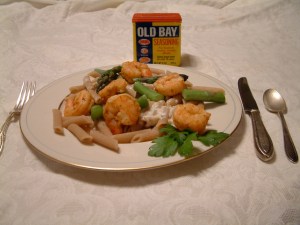
Working in a newsroom and writing about food occasionally means that interesting packages sometimes end up on my desk. For instance, a yellow and blue can of Old Bay seasoning.

Good Friends: Steamed shrimp & Old Bay seasoning

Good Friends: Steamed shrimp & Old Bay seasoning

Old Bay is celebrating its 70th year since a German immigrant named Gustav Brunn settled in Baltimore and started seasoning local crabs and shrimp with heavy doses of paprika, pepper, and a dozen other “secret” ingredients. Despite Old Bay’s aggressive ad campaign the spice had never really registered with me until 6 ounces of it arrived in the mail.

(more…)

Read Full Post »

Soup for 'June Gloom'

The forecast in Boston calls for rain for the next 10 days. As a New Englander, it’s hard not to think that once June rolled around we would get our share of mild, sunny days after the dump of snow we got this year.

Apparently Mother Nature feels we still need to shore up some more of that hardy Yankee character by postponing our outdoor fun for just a bit longer. Gray clouds fill the horizon. Sidewalks are slick.

So, when stuck in doors as the rain pounds on the roof turning your attention to a nice steaming pot of soup is always a good idea. Secretly, this means we can enjoy the comfort of hearty bread for another week or two before really having to worry about how that swimsuit will fit this summer.

Sunburst Soup

Sunburst Soup

(more…)

Read Full Post »

In general, there are two kinds of plants in my mind: The ones that you look at and the ones that you eat. I get a little uncomfortable when those lines get blurred.

For instance, if you carve a happy face into a pumpkin you shouldn’t eat that pumpkin. The same goes for those purple-brown ears of dried Indian corn that people leave about during Thanksgiving – you don’t eat corn that isn’t yellow.

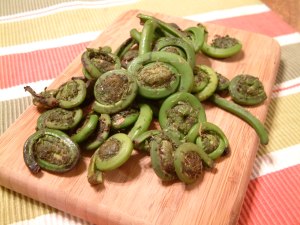
Even though I grew up with a mom who has an ability to grow anything from the ground and who constantly tosses nasturtium blossoms into salads and has been known to sautée dandelion leaves with bits of bacon I simply didn’t want any of her weird dishes. I definitely drew the line when it came to the uncurling leaves of ferns, called fiddleheads.

Fiddle heads

Fiddleheads

(more…)

Read Full Post »

Sarah Beth Glicksteen/The Christian Science Monitor

Sarah Beth Glicksteen/The Christian Science Monitor

When it comes to vegetables, even urban “locavores” can get their hands dirty in the effort to eat only local foods. All you need is a bit of sun and a patch of soil, and by summer’s end you can decorate salads with your own “locally grown” produce.

Meat, on the other hand, is another challenge completely. That’s best left to farmers and ranchers.

Local meat – livestock consumed within 150 miles of the place where it was humanely raised – is still a relatively small industry. However, more farmers’ markets, mail-order companies, and stores that specialize in organic or local foods are featuring local meats. (To find a store near you, visit www.localharvest.org.) Proponents are quick to point to the benefits: Local meats aren’t exposed to the same stresses commonly found in feedlots, and there is a noticeable difference in taste, too.

“Grass-fed meat tends to be leaner overall, but I would contend far more flavorful,” says Kurt Friese, a chef from Iowa City, Iowa, whose restaurant, Devotay, serves mainly local produce, including meat from area farms. “For beef to taste like beef, cows need to eat what they are built to eat.”

Kurt Friese’s Devotay restaurant in Iowa City is primarily a tapas bar. Since 1996, one item that has never left the seasonally changing menu is albondigas, or meatballs. Devotay uses local bison meat from Bill Leefer’s ranch near Solon, Iowa, for this popular dish.

Bison Albondigas (Buffalo meatballs)

This recipe serves a crowd, but it can be halved or quartered (quartered recipe serves 4).

1 onion, minced

2 tablespoons garlic, chopped

2 tablespoons olive oil

2 tablespoons salt

1/4 cup herbs, chopped (consider equal parts parsley, thyme, oregano, basil, and rosemary)

1/2 cup cooking sherry

4 pounds ground bison

6 eggs

3 tablespoons Worcestershire sauce

Enough bread crumbs for desired consistency

Preheat oven to 375 degrees F.

Sauté the onion and garlic in olive oil until tender with salt, herbs, and garlic. Deglaze by adding sherry, then reduce liquid 50 percent by simmering, and cool.

Mix the bison with eggs and Worcestershire sauce, then add cooked, cooled onion mixture and bread crumbs until proper consistency is reached. To test the consistency, portion with a sorbet-size scoop, and form the meat mixture into balls a little smaller than golf balls. If they hold up well, you have the right consistency.

Flatten a small amount into a patty and fry it quickly on the stove top, then adjust the mixture’s seasoning to taste.

Form the rest into balls and place on a parchment-lined cookie sheet. Bake about 15 minutes or until firm. Serve plain or with your favorite tomato-sauce recipe.

– Adapted from ‘A Cook’s Journey: Slow Food in the Heartland,’ by Chef Kurt Michael Friese.

To read the full article on CSMonitor.com, click here.

Read Full Post »

Chef in Season: Deborah Madison

Worn canvas bags have become this summer’s must-have accessory for locavore shoppers. They boldly declare their superiority to the plastic bag, now widely considered passé and a detriment to the environment.

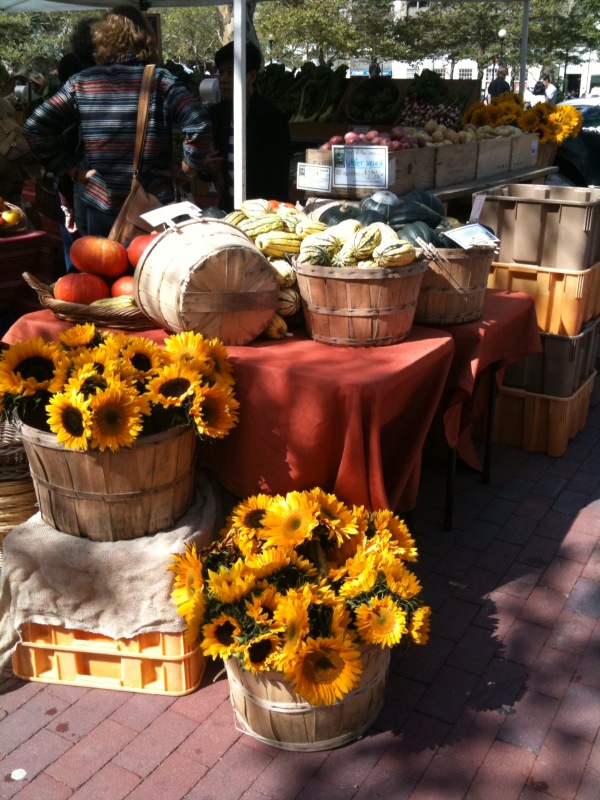
These fashionable totes are probably carried to the local farmers’ market at least once a week. There, shoppers mingle with farmers in the late-summer sunshine, and everyone basks in the warmth of community connections as they select from a bevy of locally grown bounty.

Good shopping made simple, right?

Not necessarily. Supporting your farmers’ market is one way to participate in the national conversation about food, but it still requires some shopping savvy to know what is truly in season. Always-available rows of perfect produce at the grocery store have dulled shoppers into believing that if it’s pretty and says “organic,” it’s going to burst with flavor. The same goes for that lovely fruit on display at the farmers’ market.

“We need to stop thinking that we can have everything all the time and that it is going to be fabulous,” says Deborah Madison, the author of nine cookbooks, including, “Local Flavors: Cooking and Eating From America’s Farmers’ Markets.” “[As a result], we don’t pay attention to things that last throughout the summer, like rhubarb.”

When it comes to fruit (who doesn’t know the disappointment of biting into a bad peach?), Ms. Madison advises picking it up and inhaling deeply. If the aroma entices as much as the color, you’ve got a winner. Forget squeezing, which will reveal nothing and cause bruises.

“It takes a really good farmer to know when to pick fruit,” says Madison who has visited more than 100 markets across the country. “Fruit is so fragile and so time-sensitive.” If you “take a bite and it fills you with pleasure – [that] is so hard to achieve.”

If farmers offer a sample of their crop, try it. Better yet, get to know your regional growing cycles and stand firm against visually alluring produce outside its peak.

This is especially true for fruit, which doesn’t ship well. “I never eat strawberries unless I travel to California,” says Madison.

In New Mexico, where she lives, August belongs to chiles. “The smell of roasting chiles in the farmers’ market is one of the delights of this time of year,” she says.

Try Madison’s simple hunger fix made with chiles and warm goat cheese wrapped in a tortilla. And let those memories of hard, tasteless fruit melt away.

Soft Taco with Roasted Green Chiles and Goat Cheese

Warm roasted chiles slipped into a fresh tortilla with a piece of local goat cheese is one of the best ways to satisfy that after-shopping hunger.

2 long green chiles (such as New Mexican natives, Joe Parkers, Esponola Hots, or poblanos)
1 large wheat tortilla
Soft fresh goat cheese, to taste
Chopped cilantro, to taste

Roast the chiles until charred, then drop into a covered bowl to steam for 10 to 15 minutes. Slip off the skins and pull out the seeds, then pull into strips with your fingers. Place the tortilla in a dry skillet over medium heat. As soon as the bottom is warm, flip it over. Put the chiles on top, crumble the cheese over it, and add the cilantro. (You can add salsa, too, if you like.) When the cheese starts to soften, slide the tortilla onto the counter, then fold it in half. Press down, wrap in a napkin, and enjoy. Serves 1.

From Deborah Madison, ‘Local Flavors’

——————–

This article first appeared in The Christian Science Monitor.  To hear my interview with Deborah Madison, click here.

Read Full Post »

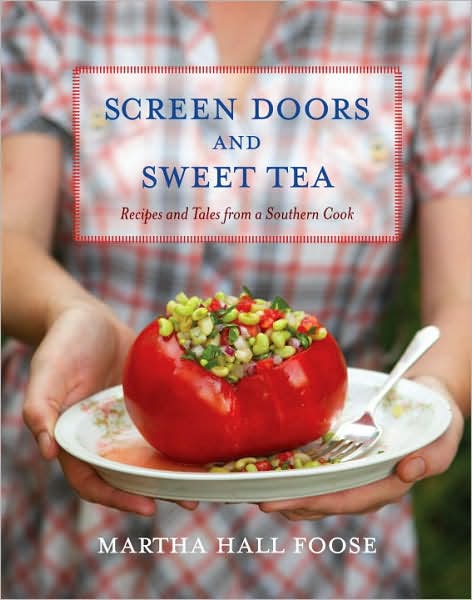
If you have traveled the world, there is nothing quite like the aroma of a well-loved dish to bring you right back home. For Mississippi Delta chef Martha Hall Foose, a whiff of slow-simmering gumbo is akin to coming around the bend and catching sight of the bridge that straddles the Yazoo River near her house: Both promise that familiar comforts aren’t far off.

Meals made with ingredients grown right out the back door may hum with flavor, but they also tell the story of recipes passed down the generations and shared among neighbors. To Ms. Foose, author of the new cookbook “Screen Doors and Sweet Tea,” a good, local dish can taste even better if she knows the farmer who has grown the ingredients.

“I’m a big fan of our local farmers’ market,” says Foose. “The green beans you buy from someone you’ve known since elementary school are going to taste better than some ‘unknown’ green beans…. It really does make a difference to have that social and emotional connection to food.”

To read the full article, hear an interview with Martha Hall Foose, and see a recipe for Sunflower Squash and Silent Shade Cobbler, click here.

Read Full Post »

Chef in Season: Carl Schroeder

From the trained chef to the home cook, preparing meals with fresh, local ingredients over shipped, shrink-wrapped food seems an obvious choice. Shopping locally may have a growing appeal among those wanting to lessen their carbon footprint, but its true attraction lies in simple flavors that sing for themselves.

“The quality of [fresh] ingredients is so good that you don’t have to do a lot,” says Carl Schroeder, executive chef and owner of Market Restaurant in Del Mar, Calif. “If you’ve got some great summer squash, sautée it … with some garlic, olive oil, and season it up … [with] some fresh chopped herbs, and you are done. That’s the beauty of it.”

Mr. Schroeder, California’s 2005 restaurant chef of the year and this year’s San Diego chef of the year, lives this philosophy. Every day he handpicks his ingredients from Chino Farms, a farm stand a short drive from his restaurant. At Market, Schroeder works with his team of talented cooks to conjure up a new menu almost every night.

Creative simplicity in the kitchen is a panache home cooks can easily emulate, but make sure you start with the best produce.

“Buying a great tomato is so much better than trying to make a bad tomato taste good,” says Schroeder. “All it takes is a good salt and a good vinaigrette, and you are ready to roll.”

So pay a visit to your local farmers’ market and load up. Then play chef with these recipes for chilled vegetable soups – a cool delight for a warm summer evening.

To hear an interview with Carl Schroeder and see recipes for Chilled Corn and Lobster Soup and Chilled Avocado and Tomato Soup and  Chilled Heirloom Tomato and Extra Virgin Olive Oil Soup, click here.

Read Full Post »

« Newer Posts