Feeds:
Posts
Comments

Archive for the ‘Eating in season’ Category

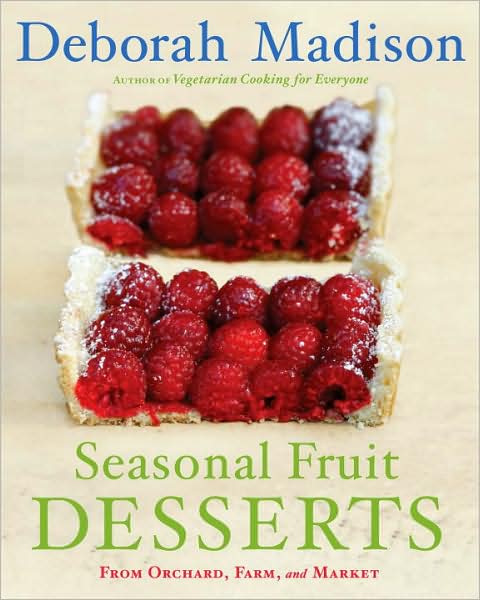
Everyone has experienced the disappointment of buying a lovely looking piece of fruit only to discover it is as appetizing as cardboard. Deborah Madison hopes to redeem the paradise-lost pleasures of truly ripe fruit. The cookbook guru has written a bit of a love letter to summer’s jewels with her new “Seasonal Fruit Desserts” (Broadway Books, $32.50). A perusal of the gorgeous photos alone will prompt you to rush to your nearest Farmers’ Market and load up your canvas shopping bags.

Madison wants us to rededicate ourselves to the fleeting joys of locally grown, seasonal fruit – even if it requires the discipline of putting those well-traveled strawberries back on the shelf in mid-December. Whether it is figs and raspberries elegantly presented unadorned or a recipe for a compote, “Seasonal Fruit Desserts” advises even as it tempts. “Don’t assume that everything from the farmers’ market or farm stand is stellar,” she cautions. “Be watchful, asks for tastes, sniff, ask questions, and be prepared to say, ‘No, thanks.'”

I was delighted that Madison includes a mention of pawpaws, a fruit native to the Midwest that some say should replace the carbon-footprint-ladened banana of the tropics. In fact, the pawpaw is a distant cousin of the banana. “Its bananalike notes are probably what account for its other names – prairie banana, Hoosier banana – and other banana appellations for every state where the pawpaw grows,” writes Madison. “[T]he pawpaw is the only member of the [Annonaceae] genus that doesn’t require a tropical climate to survive.”

How about them apples – er – pawpaws?

As always, Madison offers tips for preparing fruit, techniques for coaxing the best flavors out of your dishes, and advice on the best kitchen equipment to have on hand. “Seasonal Fruit Desserts” will set you up perfectly to enjoy the sweetness of slow summer evenings.

Read my article about shopping at Farmers’ Markets and listen to my interview with Deborah Madison by clicking here.
Read Full Post »

You can tell a true New Englander in May by two things:


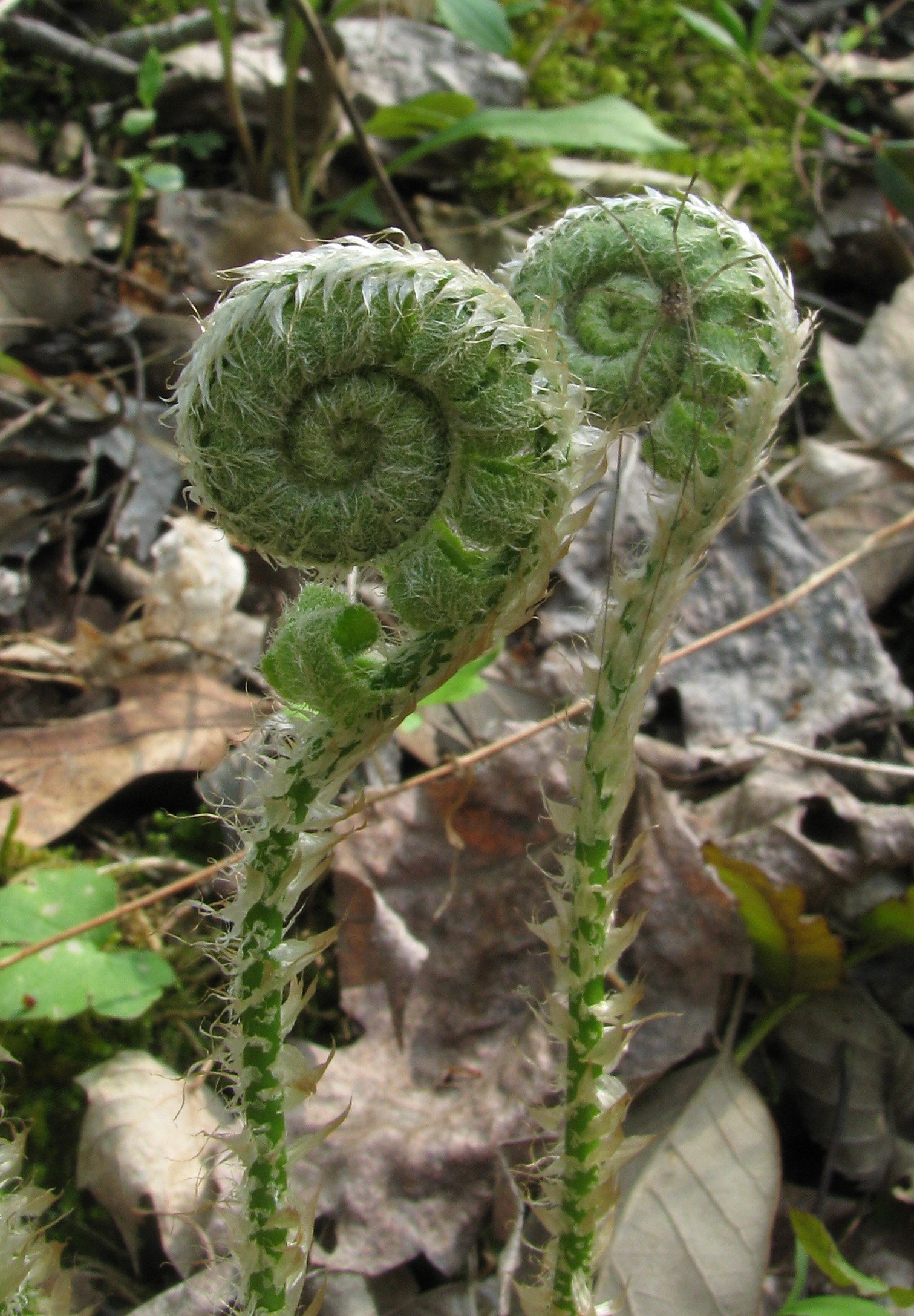
1. They know what a fiddlehead is.
2. They have eaten one and enjoyed it.


The sudden cold snap we are having here means we might get another week or two of enjoying this once-a-year treat. Food bloggers are reporting their appearance in their CSA bounty. You can also  pickle fiddleheads, but no matter how you decide to prepare them, make sure you clean them well.

I tried fiddleheads last year for the first time, with some success (see recipe here). This year my friend and colleague Leigh said her family enjoyed them at their Mother’s Day feast. What else did they have? French grilled pork chops – with olive oil, garlic, rosemary, herbes de Provence, salt & pepper Yukon Gold potato and carrot purée. I can see the artful fiddlehead was the perfect side note.

****************

Fiddlehead ferns by Leigh Montgomery

This New England delicacy is as beautiful as any of nature’s patterns or the scroll of a violin that inspires their name.  To me nothing else tastes like an early spring evening or a verdant forest floor.  When I see them I am transported back to a memorable fly-fishing trip on New Brunswick’s Miramichi river, where every night we retired to the lodge for salmon and fiddlehead variations on the side or in soup.  About the taste – it does have a slightly wild taste and tough consistency, requiring a little trimming, softening and saucing.  I found this recipe, from a 1992 Gourmet magazine issue, an easy and elegant way to introduce them to those who might not have tried them before.

(more…)

Read Full Post »

There are plenty of references to Rachel Carson’s “Silent Spring” on Earth Day every year, but it’s Carson’s poetic book, “The Sense of Wonder,” that sits on my list of all-time favorite reads. Originally written as an essay for Women’s Home Companion, Carson urges parents to take their children to the wild places to teach them about the wonder of  life around us. Its childlike appreciation for all things natural helps to temper the otherwise worrisome discussions about our Blue Planet.

So I thought you’d might enjoy this short movie clip that uses Carson’s words to describe lessons learned from the Monarch butterfly (sorry about the breathy voiceover and violins, but Carson’s message centered on how the presence of happiness and beauty can nudge aside the sadness associated with the end of earthy lifecycles is inspiring).

Happy Earth Day. May you bloom with gratitude, fresh produce season is just around the corner….

Read Full Post »

Alice Waters believes in puttering in the kitchen. Chop and grind your own food. Cook slowly over moderate heat. Breathe. Taste. Compost. What’s the big rush, right?

Just in time for Earth Day, the ideas behind the Slow Food Nation 2008 event that brought together reform-minded foodies in San Francisco can now be savored at your leisure with Waters’ new cookbook “In the Green Kitchen” (April 2010, $28). Photographer Christopher Hirsheimer has captured gorgeous profiles of the chefs who offered cooking demos in the event’s Green Kitchen during the weekend. Simple recipes accompany each photo, their bylines reading like a “who’s who” of the foodie world: Tomatillo Salsa from Rick Bayless; Buttermilk Biscuits from Scott Peacock; Simple Tomato Sauce from Charlie Trotter; Linguine with Clams from Lidia Bastianich; Buttered Couscous from Dan Barber; Potato Gratin from Deborah Madison, and the list goes on. (Kinda makes you wish you had flown out there, huh?)

“All the good cooks I know are sensualists who take great pleasure in the beauty, smell, taste, and feel of the ingredients,” writes Waters in the introduction. “The value of learning a foundation of basic techniques is that once these skills become instinctive, you can cook comfortably and confidently without recipes, inspired by the ingredients you have.”

A cookbook that says forget about cookbooks? That’s about right. But sometimes we all need a reminder just to jump in and swim, er, cook and “In the Green Kitchen” with its pantry and essential kitchen-tool list is a good place to start.

Or if you are a procrastinator, take some time and copy this down and fasten it to your ‘fridge door:

A Green Kitchen Manifesto

Delicious, affordable, wholesome food is the goal of the Green Kitchen.

An organic pantry is an essential resource.

Buy food that is organic, local, and seasonal.

Cooking and shopping for food brings rhythm and meaning to our lives.

Simple cooking techniques can be learned by heart.

Daily cooking improves the economy of the kitchen.

Cooking equipment that is durable and minimal simplifies the cooking.

A garden brings life and beauty to the table.

Composting nourishes the land that feeds us.

Setting the table and eating together teaches essential values to our children.

Now get cooking! Slowly.

Read Full Post »

It’s August and utter bliss for all who believe that if love grew from the ground it would be a sun-ripened tomato.

The tomato pots on my own balcony are yielding their own modest offerings. But the number doesn’t matter. I could eat bowl for dessert and melt in their sweetness.

Home Grown

Home Grown

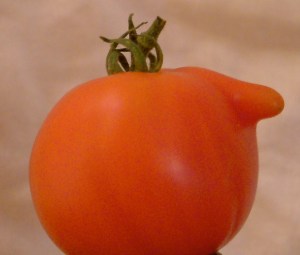
Except for one, however. The one which grew a nose.

Is that a nose?

Is that a nose?

(more…)

Read Full Post »

Citrus Pink

I have discovered a secret at my corner co-op market. It appears around the first of June and lasts only a couple of weeks.

It is sweet, pink grapefruit.

pink grapefruit

pink grapefruit

(more…)

Read Full Post »

In general, there are two kinds of plants in my mind: The ones that you look at and the ones that you eat. I get a little uncomfortable when those lines get blurred.

For instance, if you carve a happy face into a pumpkin you shouldn’t eat that pumpkin. The same goes for those purple-brown ears of dried Indian corn that people leave about during Thanksgiving – you don’t eat corn that isn’t yellow.

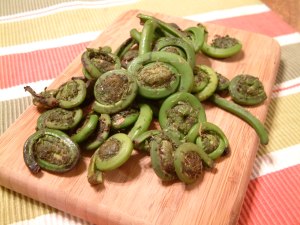
Even though I grew up with a mom who has an ability to grow anything from the ground and who constantly tosses nasturtium blossoms into salads and has been known to sautée dandelion leaves with bits of bacon I simply didn’t want any of her weird dishes. I definitely drew the line when it came to the uncurling leaves of ferns, called fiddleheads.

Fiddle heads

Fiddleheads

(more…)

Read Full Post »

The American Farmland Trust (AFT) is holding an online contest for “America’s Favorite Farmers Markets” at www.farmland.org/vote. The contest is a nation-wide challenge to see which of America’s 4,685 farmers markets can rally the most support from its customers. The winning market will get tote bags to distribute to its customers.

(more…)

Read Full Post »

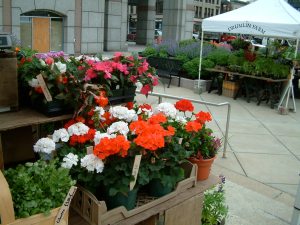
There is a new farmer’s market in Boston outside the Prudential mall that is just a few blocks away from my cubicle . I went there last week with a couple of colleagues.

Geraniums at the farmers' market

There is nothing quite like being able to push back from the computer to take a stroll in the brisk spring air. Smelling potted basil and haggling for a half a bunch of asparagus pulled the focus off the deadlines waiting back at my desk.

(more…)

Read Full Post »

Sarah Beth Glicksteen/The Christian Science Monitor

Sarah Beth Glicksteen/The Christian Science Monitor

When it comes to vegetables, even urban “locavores” can get their hands dirty in the effort to eat only local foods. All you need is a bit of sun and a patch of soil, and by summer’s end you can decorate salads with your own “locally grown” produce.

Meat, on the other hand, is another challenge completely. That’s best left to farmers and ranchers.

Local meat – livestock consumed within 150 miles of the place where it was humanely raised – is still a relatively small industry. However, more farmers’ markets, mail-order companies, and stores that specialize in organic or local foods are featuring local meats. (To find a store near you, visit www.localharvest.org.) Proponents are quick to point to the benefits: Local meats aren’t exposed to the same stresses commonly found in feedlots, and there is a noticeable difference in taste, too.

“Grass-fed meat tends to be leaner overall, but I would contend far more flavorful,” says Kurt Friese, a chef from Iowa City, Iowa, whose restaurant, Devotay, serves mainly local produce, including meat from area farms. “For beef to taste like beef, cows need to eat what they are built to eat.”

Kurt Friese’s Devotay restaurant in Iowa City is primarily a tapas bar. Since 1996, one item that has never left the seasonally changing menu is albondigas, or meatballs. Devotay uses local bison meat from Bill Leefer’s ranch near Solon, Iowa, for this popular dish.

Bison Albondigas (Buffalo meatballs)

This recipe serves a crowd, but it can be halved or quartered (quartered recipe serves 4).

1 onion, minced

2 tablespoons garlic, chopped

2 tablespoons olive oil

2 tablespoons salt

1/4 cup herbs, chopped (consider equal parts parsley, thyme, oregano, basil, and rosemary)

1/2 cup cooking sherry

4 pounds ground bison

6 eggs

3 tablespoons Worcestershire sauce

Enough bread crumbs for desired consistency

Preheat oven to 375 degrees F.

Sauté the onion and garlic in olive oil until tender with salt, herbs, and garlic. Deglaze by adding sherry, then reduce liquid 50 percent by simmering, and cool.

Mix the bison with eggs and Worcestershire sauce, then add cooked, cooled onion mixture and bread crumbs until proper consistency is reached. To test the consistency, portion with a sorbet-size scoop, and form the meat mixture into balls a little smaller than golf balls. If they hold up well, you have the right consistency.

Flatten a small amount into a patty and fry it quickly on the stove top, then adjust the mixture’s seasoning to taste.

Form the rest into balls and place on a parchment-lined cookie sheet. Bake about 15 minutes or until firm. Serve plain or with your favorite tomato-sauce recipe.

– Adapted from ‘A Cook’s Journey: Slow Food in the Heartland,’ by Chef Kurt Michael Friese.

To read the full article on CSMonitor.com, click here.

Read Full Post »

« Newer Posts - Older Posts »